Local Intelligence
Run local tools, offline notes, terminal workflows and lightweight agent logic without depending on a browser.
Built for independence
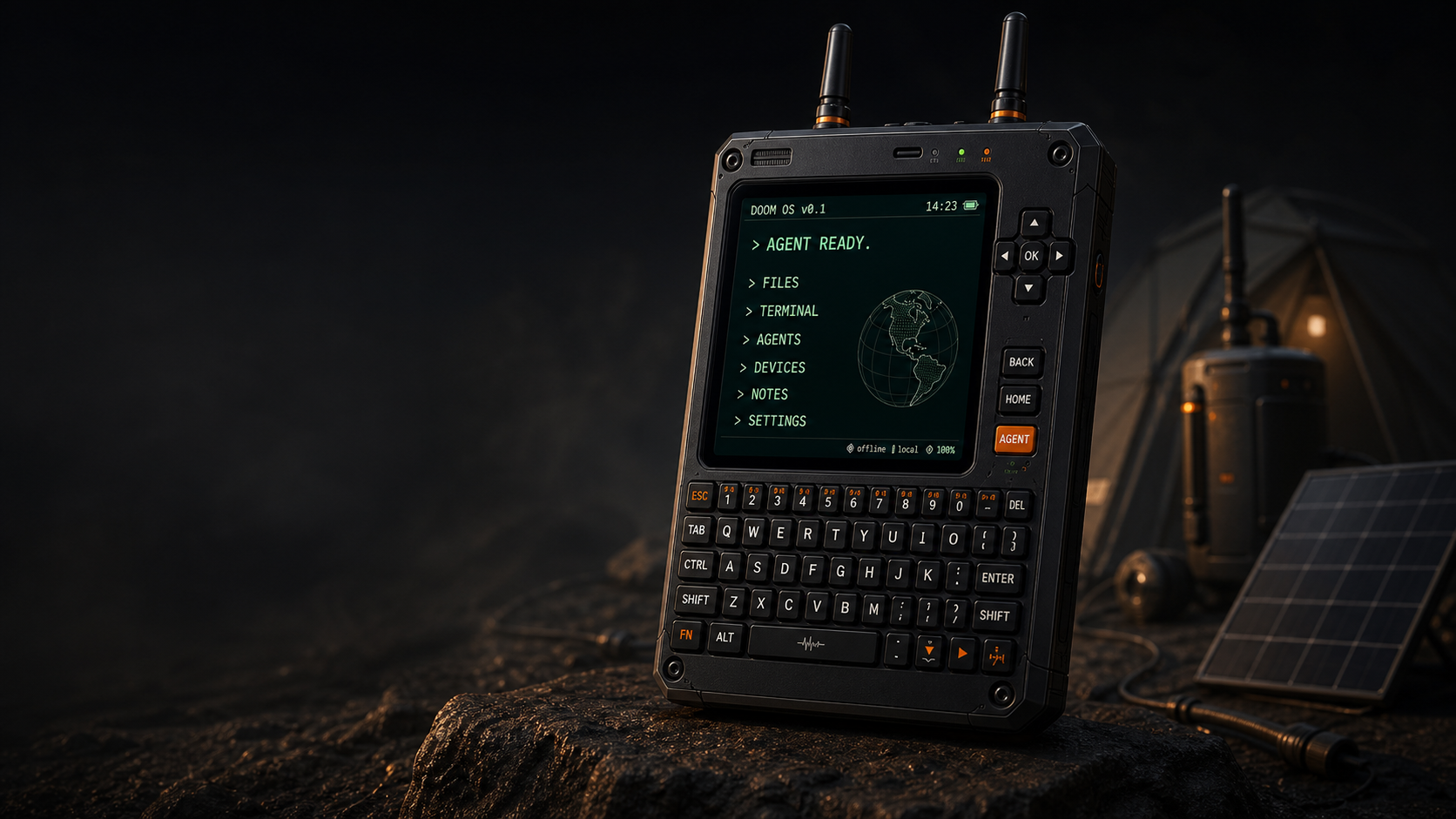
Pocket AI Agent for the physical world.
The cloud is optional.
Ownership is not.
A compact offline-first field terminal designed to run local tools, communicate independently, and deploy AI-generated logic to real-world devices.
Why it exists
Modern devices depend on accounts, subscriptions, cloud services and permanent connectivity. DOOMPUTER is built around a different idea: your tools should remain useful when the network disappears.
Just your files, your tools, your agents, and your machine.
Run local tools, offline notes, terminal workflows and lightweight agent logic without depending on a browser.
Designed around LoRa, GNSS, ESP32 nodes and optional network links for field communication.
Deploy AI-generated rules to sensors, relays, beacons and field nodes with explicit safety confirmation.
Your data, your keys, your models, your machine. Built for local-first operation and clear operator control.
Why people buy devices like this
ClockworkPi sells because the product is immediately understandable: a real handheld body, visible keyboard, Linux/open-source culture, modular boards, and enough ports to imagine personal projects. DOOMPUTER should win the same trust, then push further into offline AI, physical nodes and field automation.
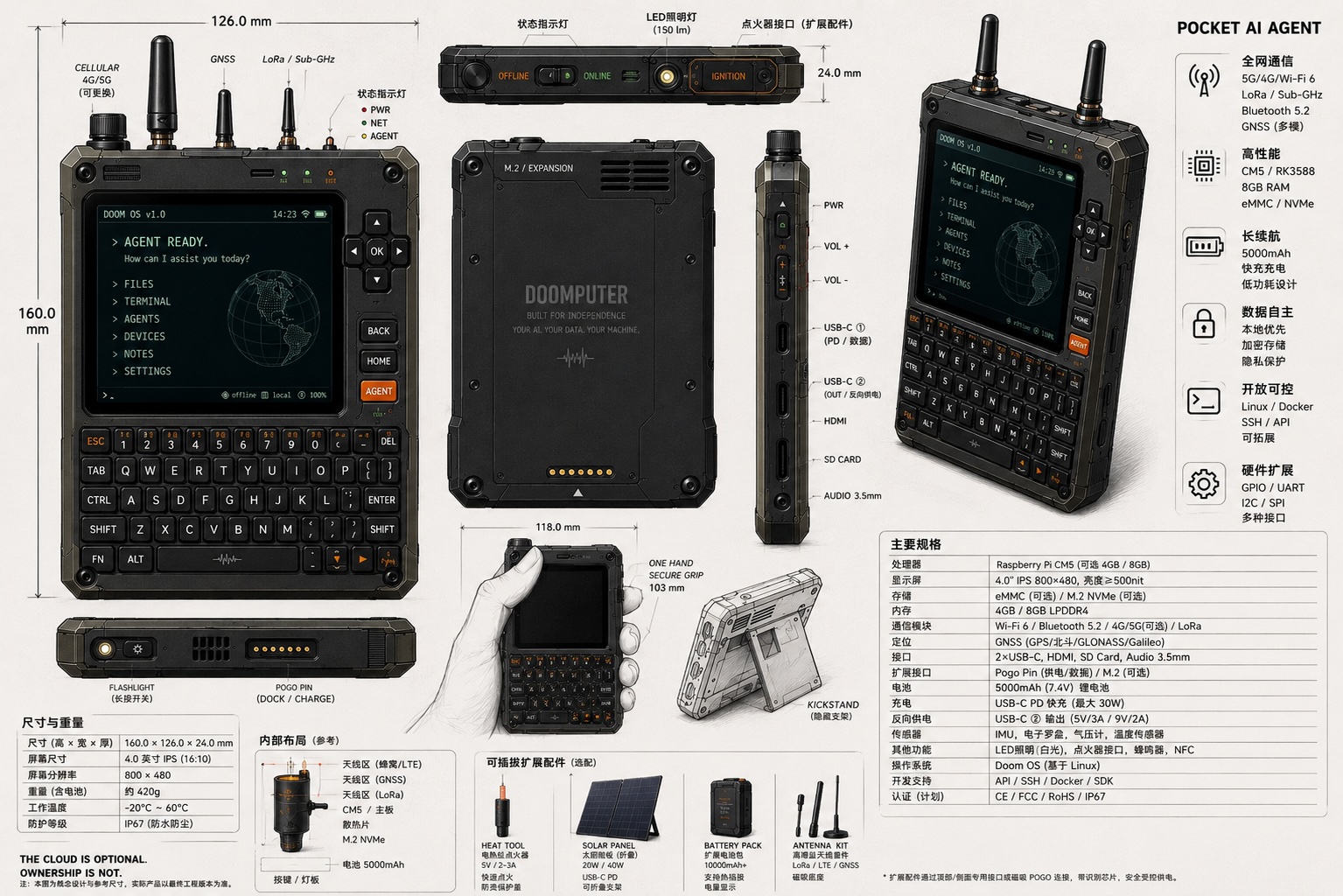
Keyboard, screen, ports and radios are shown as real working surfaces, not hidden behind abstract lifestyle copy.
The terminal, nodes and power accessories create a system people can expand, repair and talk about.
ver0.3.1 includes Doom OS direction, accessory concepts and shell-only printable structure studies.
Offline-first AI, local files and physical-world control give the product a sharper reason to exist.
Product system
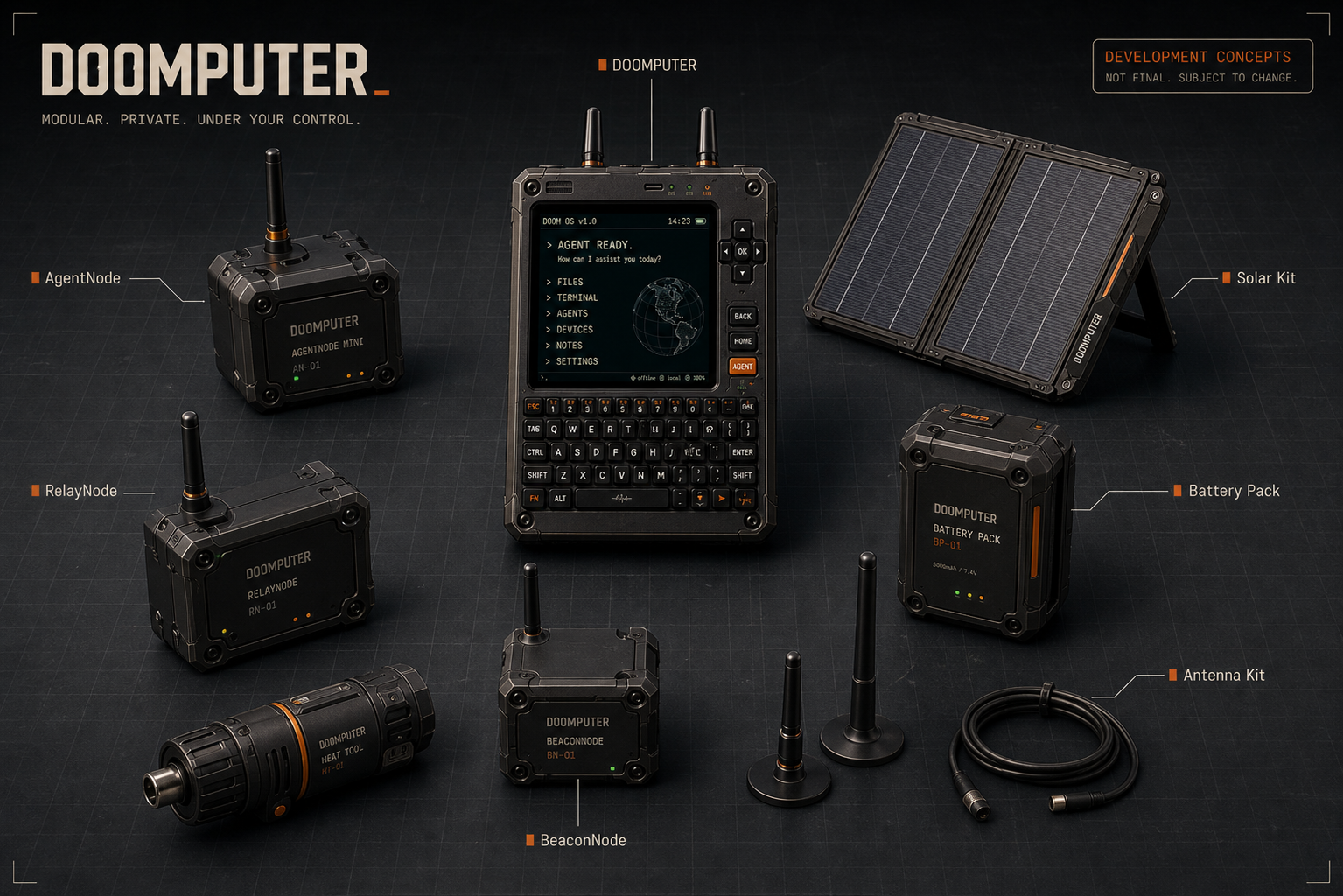
Development concepts include a main DS-01 terminal, AgentNode Mini, RelayNode, BeaconNode, Solar Kit, Battery Pack, Heat Tool, Field Light, and LoRa Antenna Kit.
Launch kit direction
The website now frames the product as a small ecosystem: DS-01 as the terminal, Doom OS as the local interface, and accessories as field modules. That makes the waitlist easier to justify before final pricing and manufacturing details are locked.
Display, physical keyboard, local shell, battery body and expansion path.
Terminal-first workflows for notes, files, agent tasks, node control and offline operation.
ESP32-class sensors, relays, beacons and signal modules that make the terminal useful outside apps.
Nodes / Accessories
These are development concepts for the DOOMPUTER ecosystem. Final design, specifications, compatibility and availability may change after engineering validation.
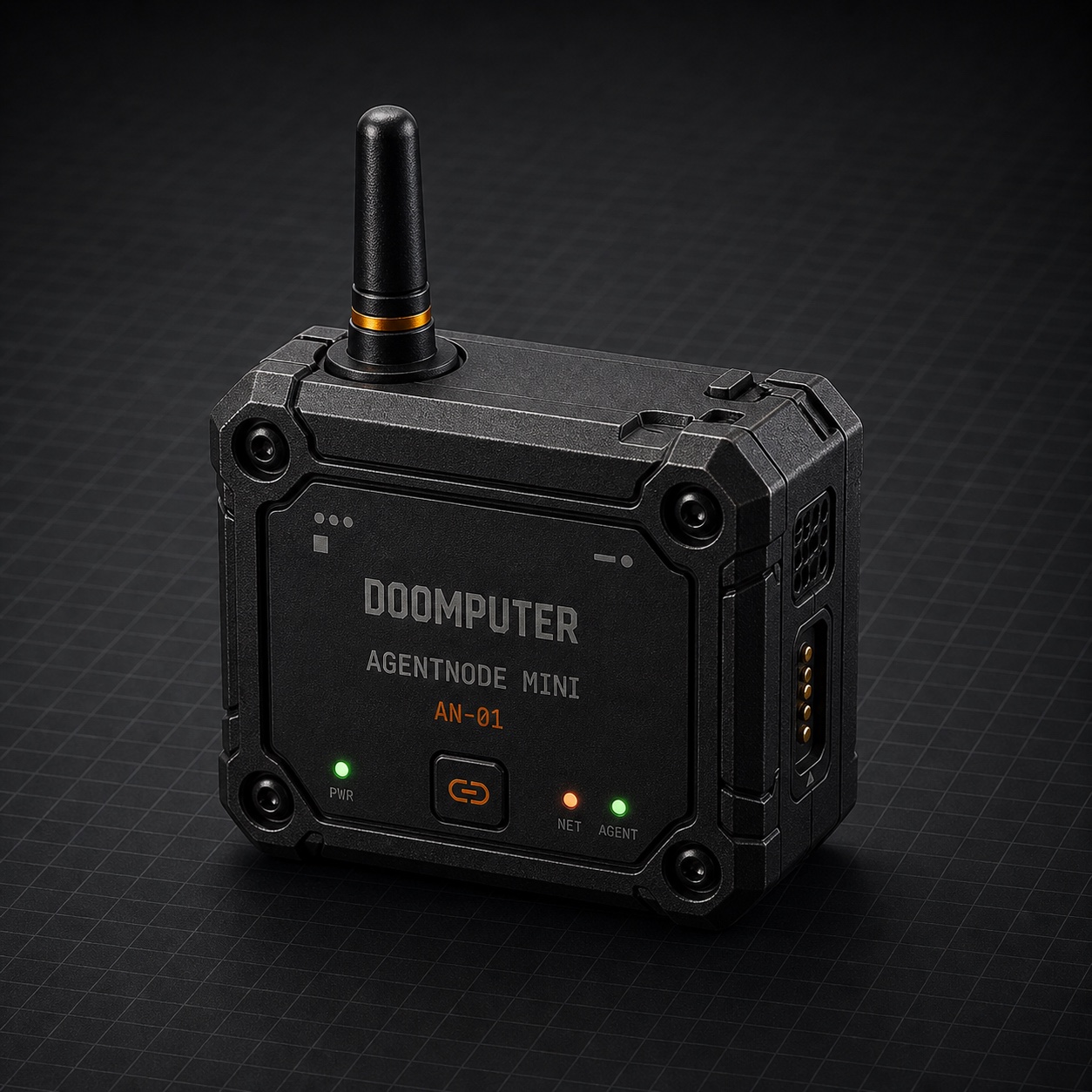
ESP32 field node for nearby sensing, local triggers and agent-issued tasks.
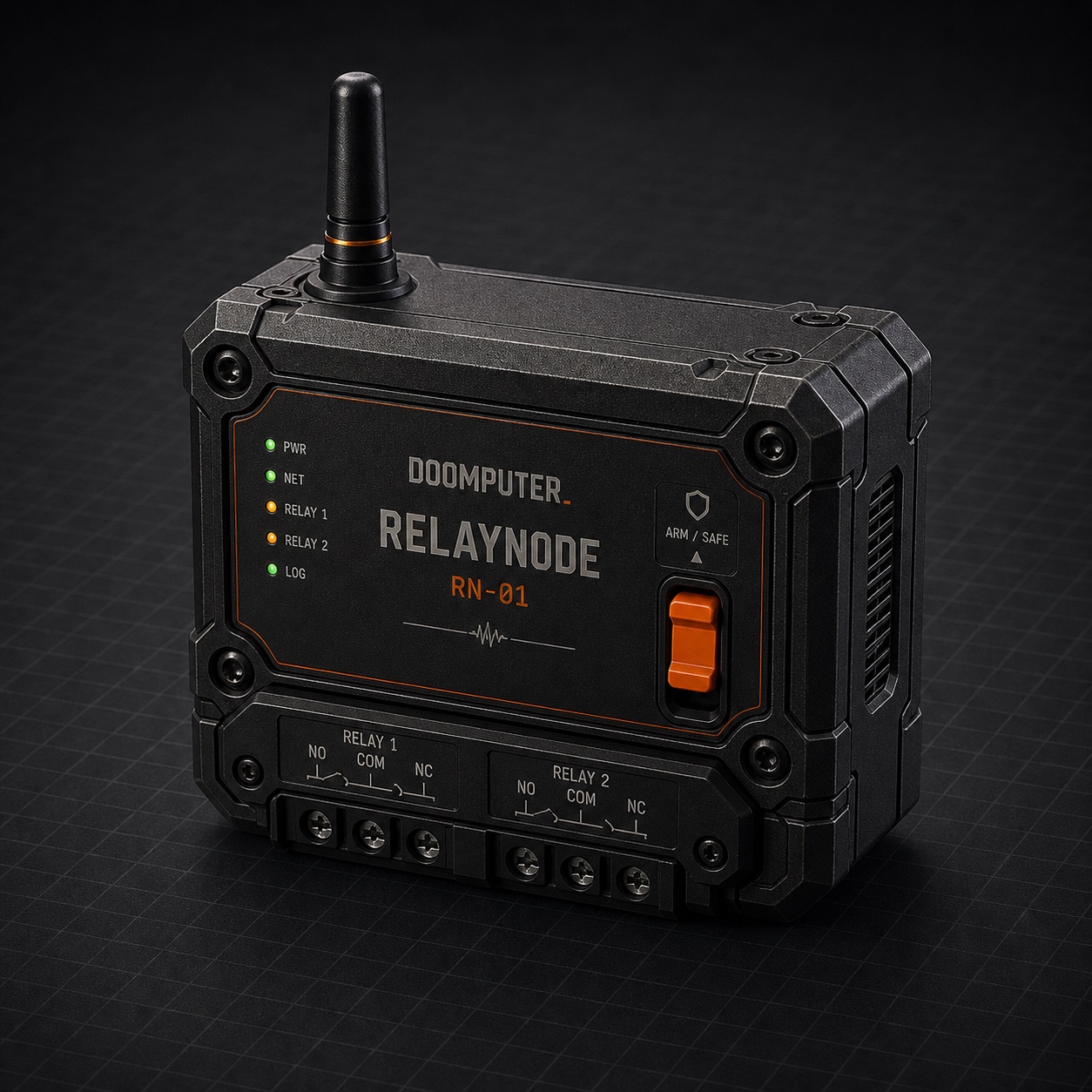
Low-voltage relay node for confirmed physical actions and auditable local logs.
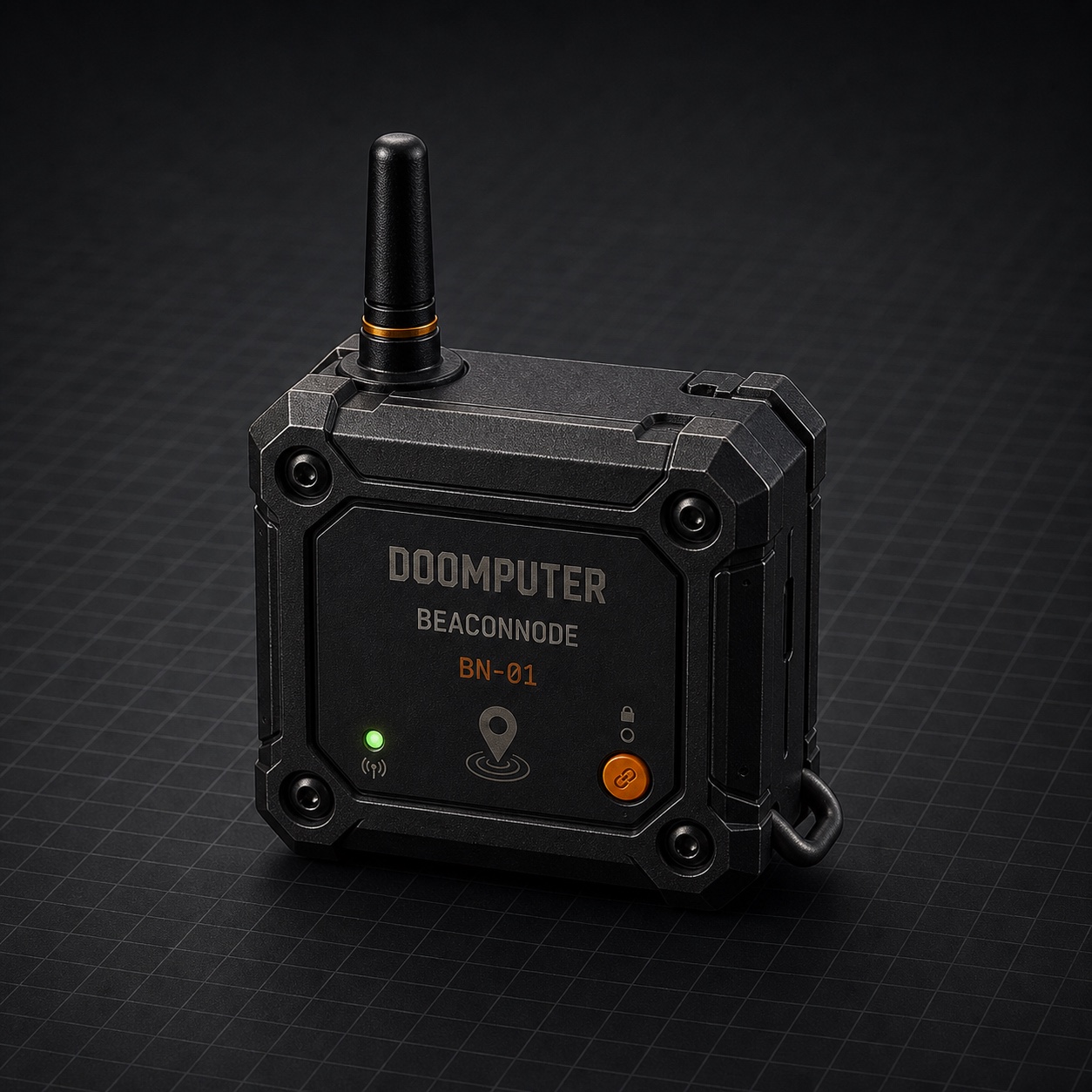
Offline-aware check-in marker for presence, status and rough field location.
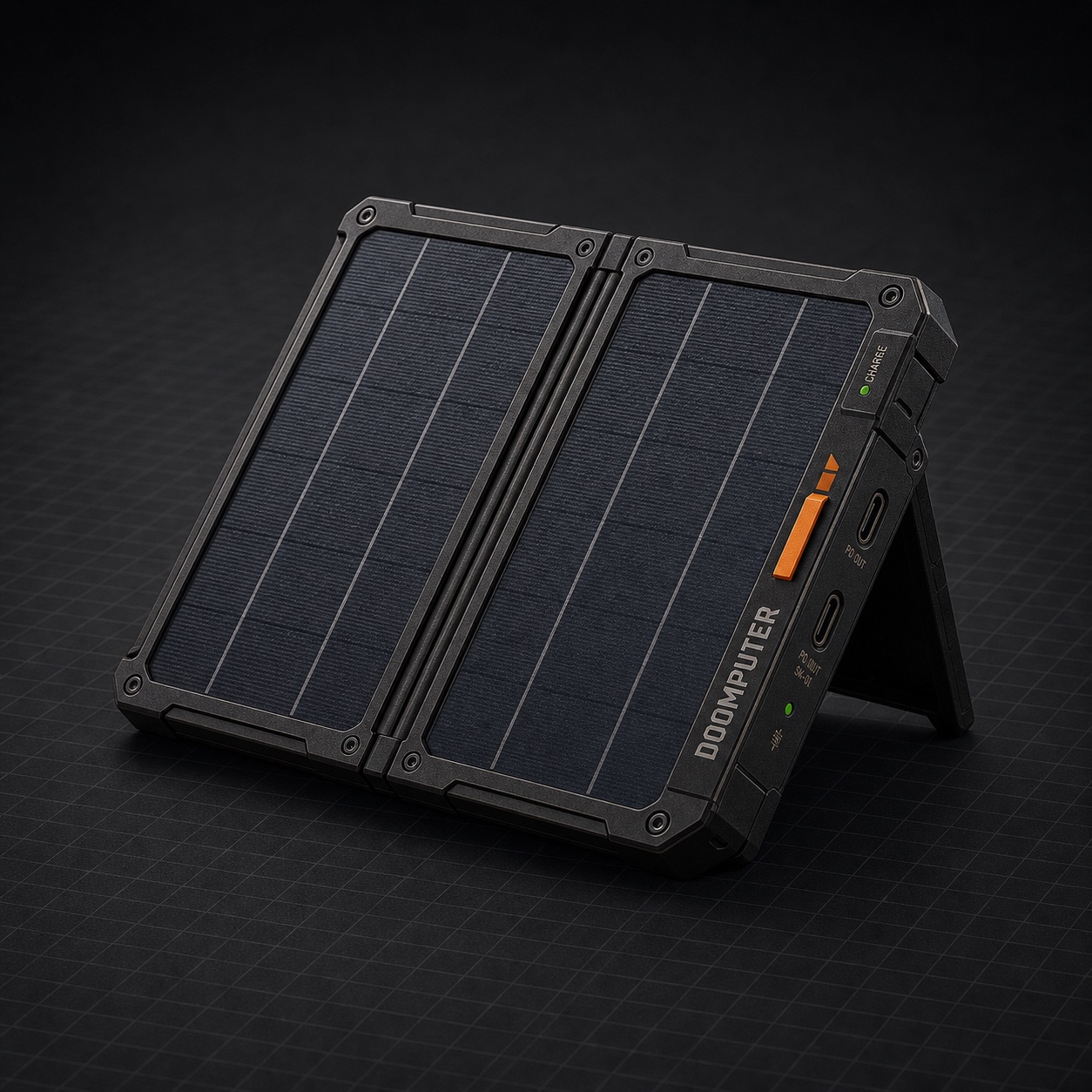
Foldable solar input for topping up the terminal and power modules in the field.
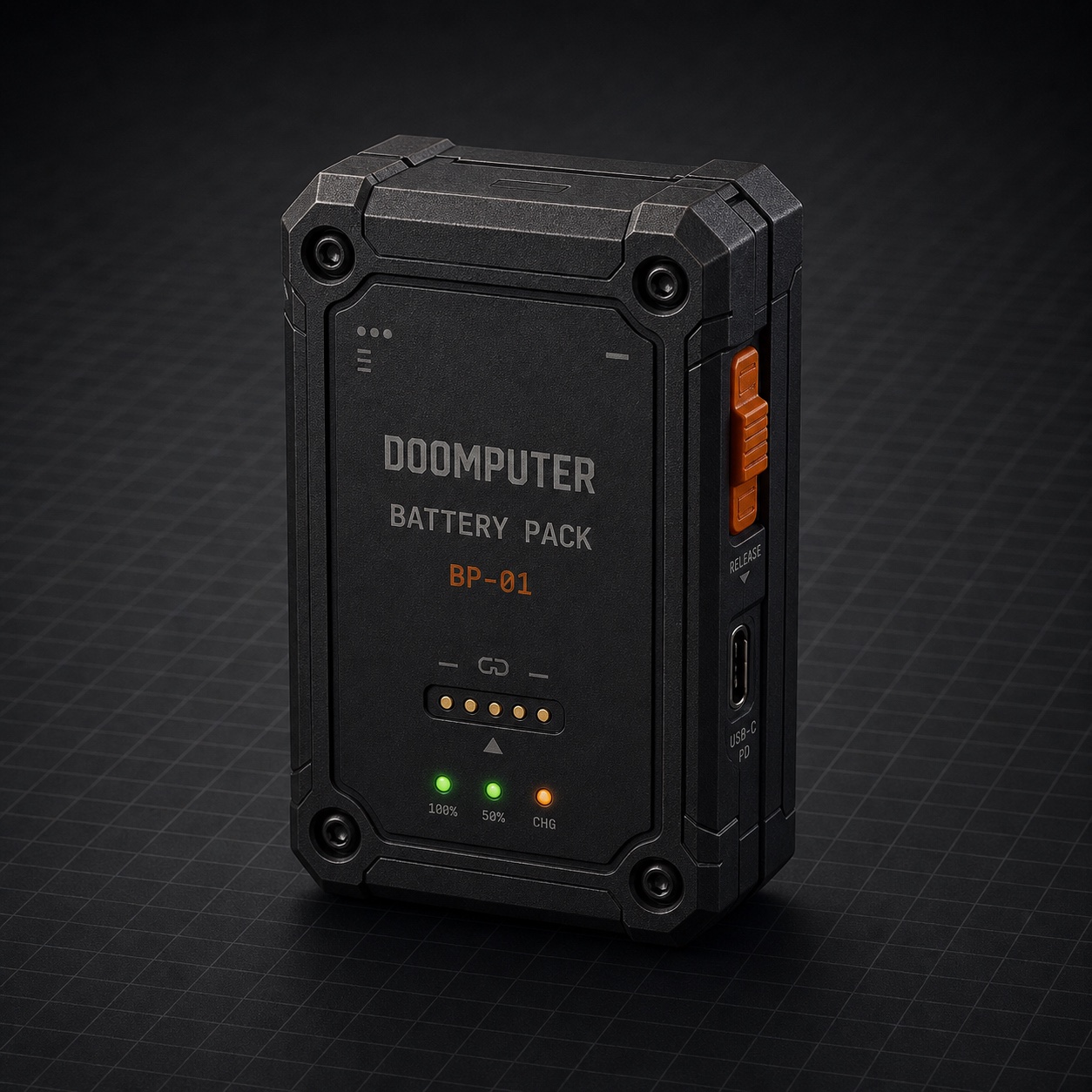
External runtime module for longer terminal sessions and docked power experiments.
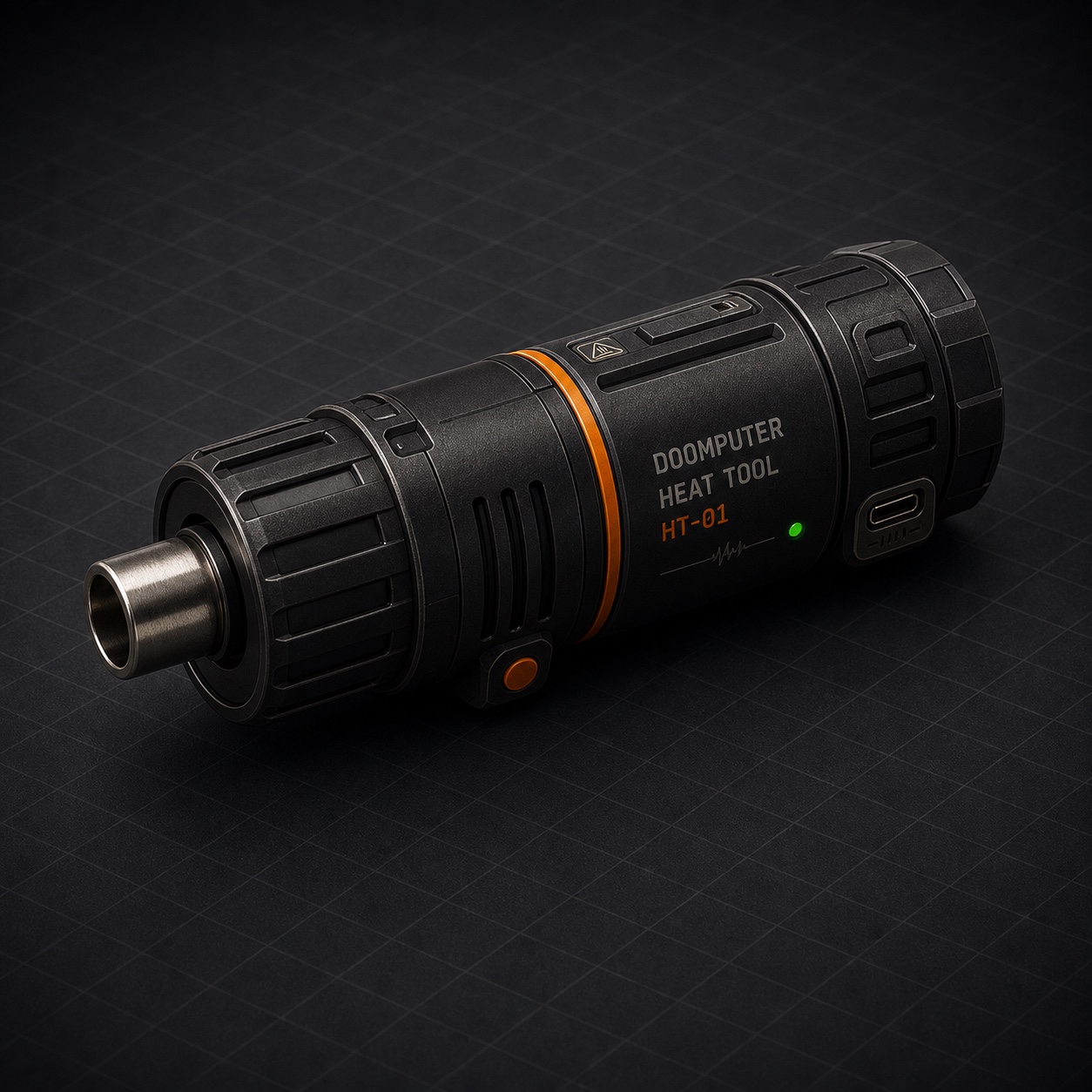
Controlled low-voltage heat utility for repair, heat-shrink and maker tasks.
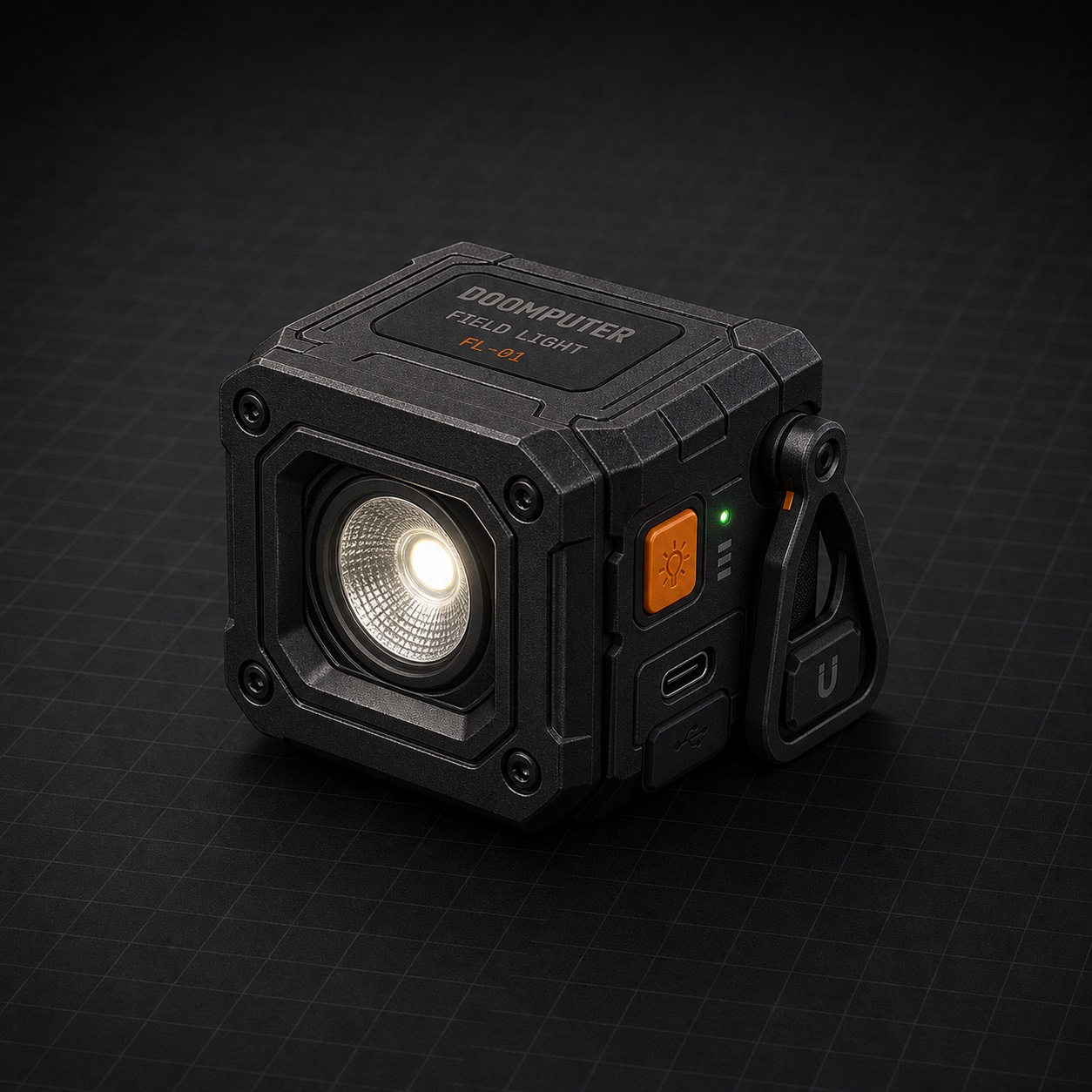
Small controllable spotlight for repair lighting, campsite visibility and beacon modes.
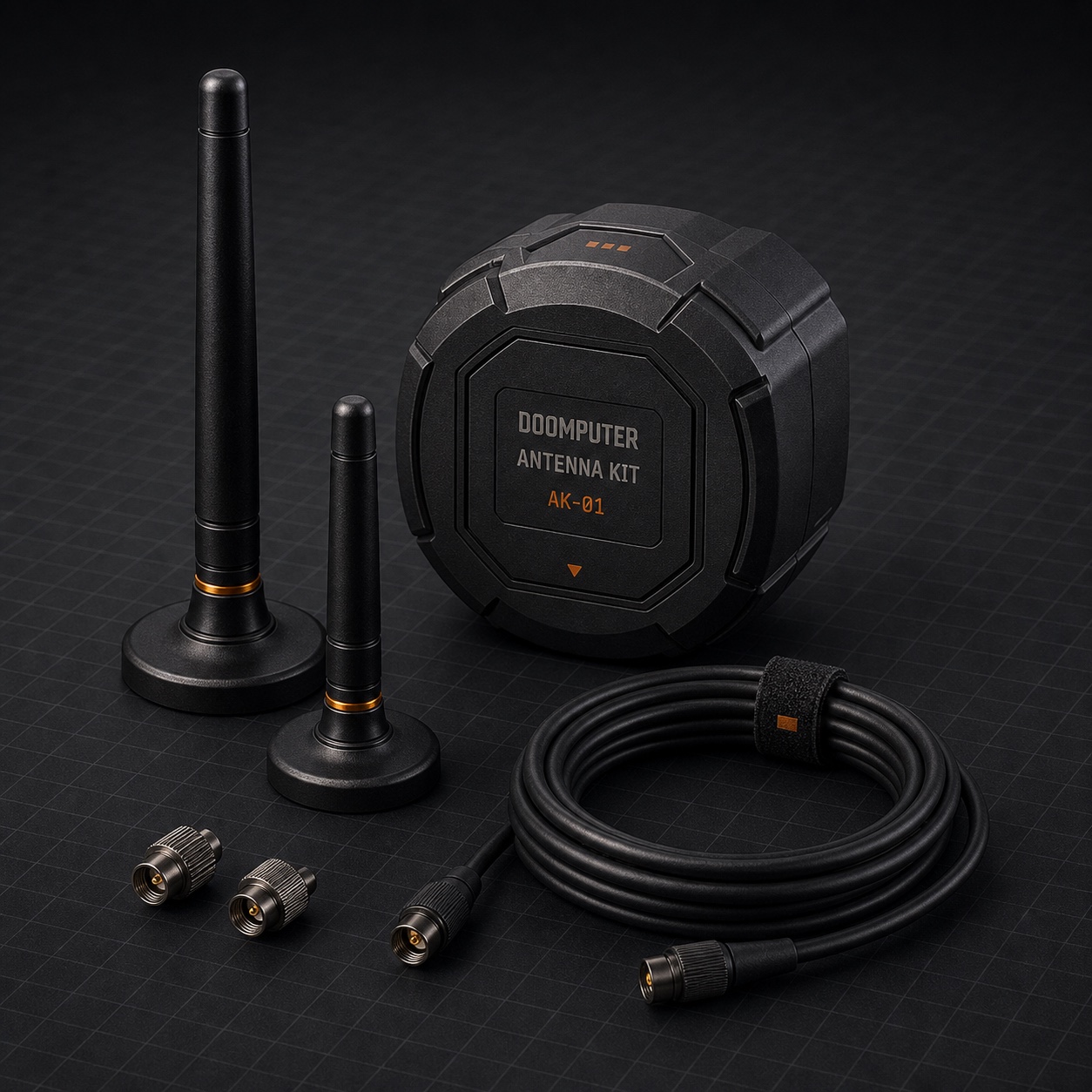
Modular antennas and cables for LoRa / GNSS experiments and repeatable range tests.
Doom OS
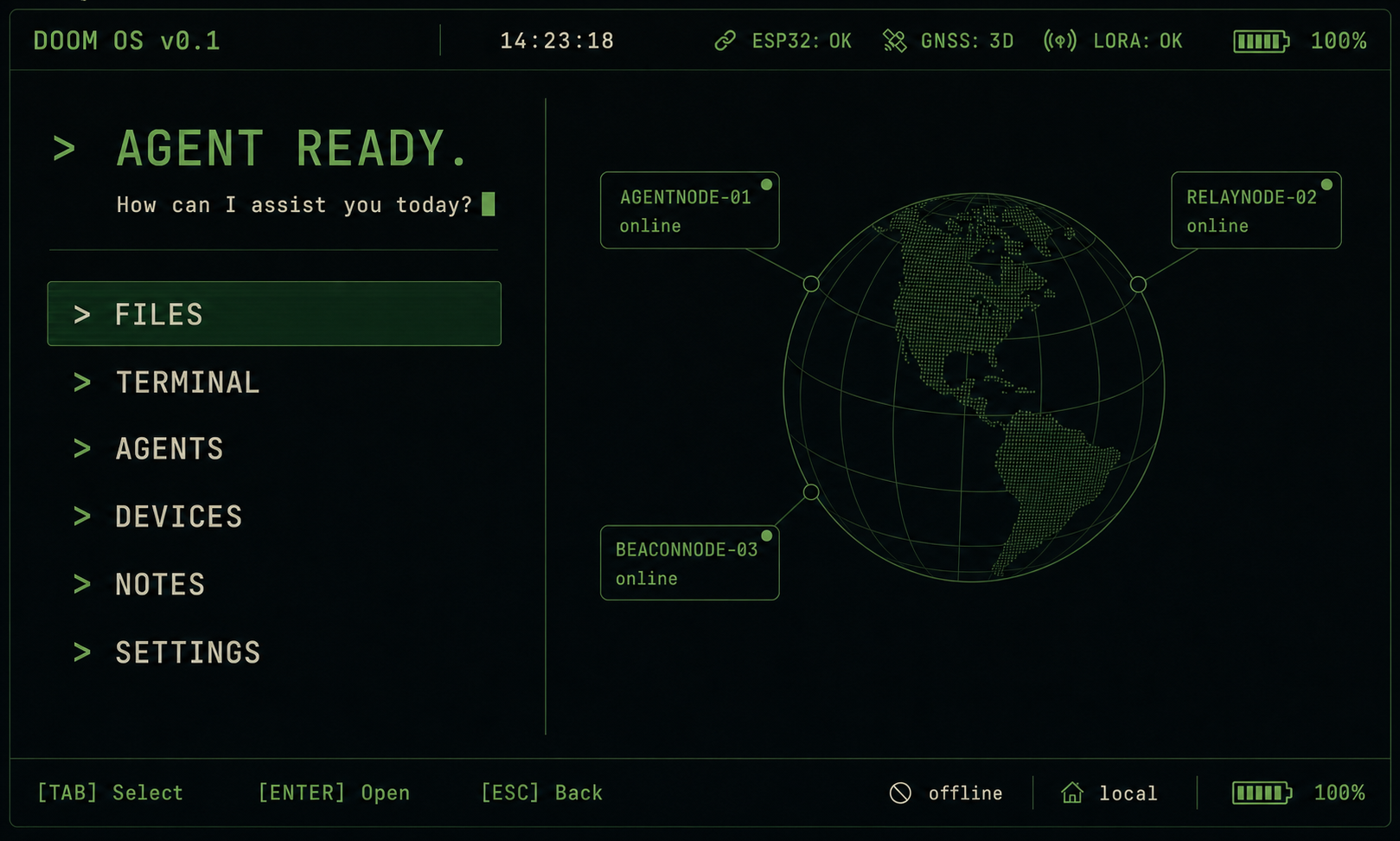
Doom OS boots into a terminal-first shell built for small screens, physical keyboards and field operations.
Physical programming
Describe a behavior. Let the agent generate a rule. Deploy it to an ESP32-based node. The node keeps running even when the network is gone.
"When temperature drops below 5C, turn on the heater. Turn it off above 10C. It must work offline."
Use cases
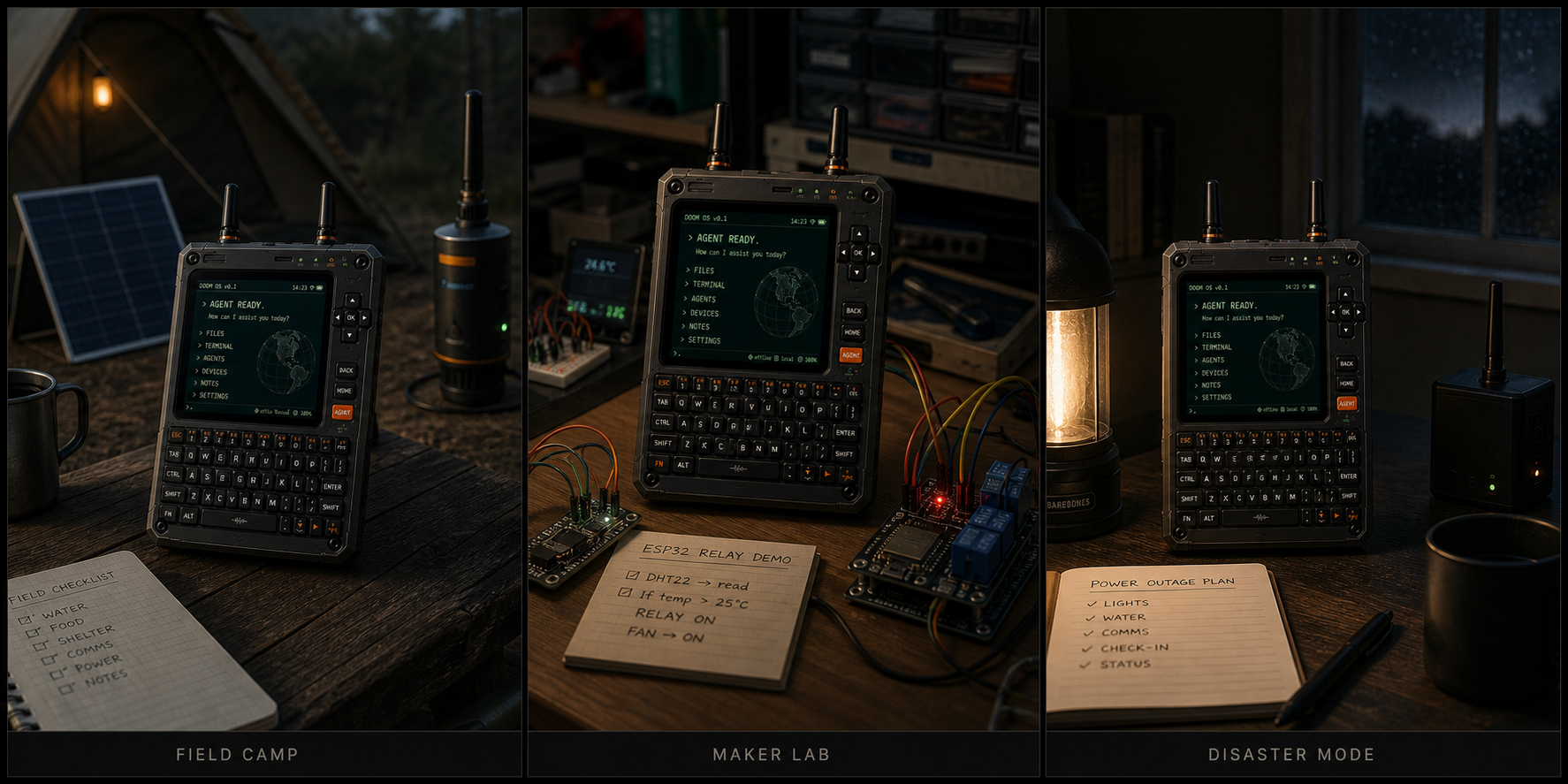
Track location, manage solar input, communicate with nodes, and run local checklists.
Send local check-ins, control beacons, and keep critical data offline when infrastructure is unstable.
Plug in an ESP32 node, describe the behavior you need, verify it, and deploy a rule.
Deploy sensor nodes, relay controls, and beacon logic without relying on cloud automation.
Hardware direction
ClockworkPi reduces buyer anxiety by making the hardware concrete. This section does the same for DOOMPUTER while staying honest about prototype status.
Development status
Join the movement
Get prototype updates, engineering notes, accessory decisions and launch timing. No spam, no platform theater.
FAQ
It is currently in prototype development. This website presents the product direction, not a finished mass-production device.
The first version focuses on local tools and agent workflows. Heavy models may run on local servers or cloud providers. Local lightweight models are under evaluation.
Core local tools should remain usable offline. Network access enhances the system but should not define it.
No. It is a civilian field terminal for developers, makers, off-grid users and physical computing workflows.
Yes, the system is designed to work with ESP32-based nodes, sensors and low-voltage relay demos. Safety confirmation and logs are required for physical actions.
After a working functional prototype and engineering validation.